
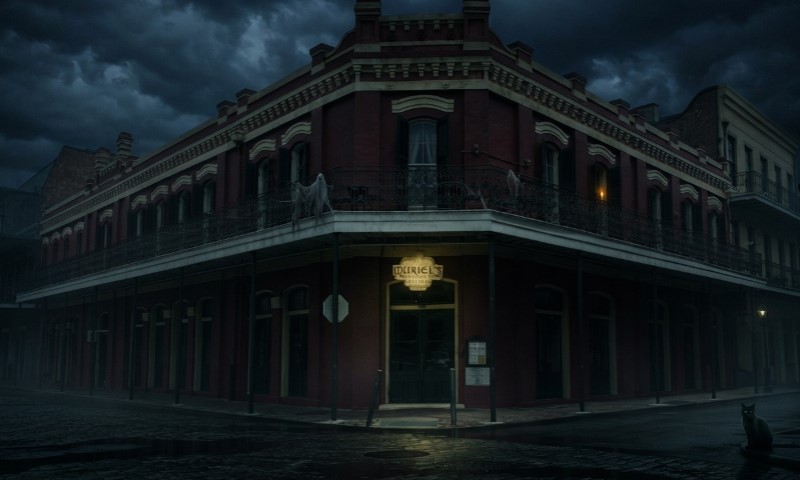
Few American cities wear their history quite as openly as New Orleans. Behind the wrought-iron balconies, gas lamps, crumbling courtyards, and narrow streets are centuries of war, disease, violence, religious devotion, scandal, and tragedy.
It is perhaps no surprise that the city has also developed a reputation for being one of the most haunted places in America.
From legendary Voodoo queens to murdered aristocrats and restless pirates, New Orleans has no shortage of ghost stories. Some are rooted in well-documented historical events.
Others have grown considerably more mysterious with each retelling. For travelers with a taste for the unusual, these locations offer a fascinating way to explore the darker side of the Crescent City.
St. Louis Cemetery No. 1
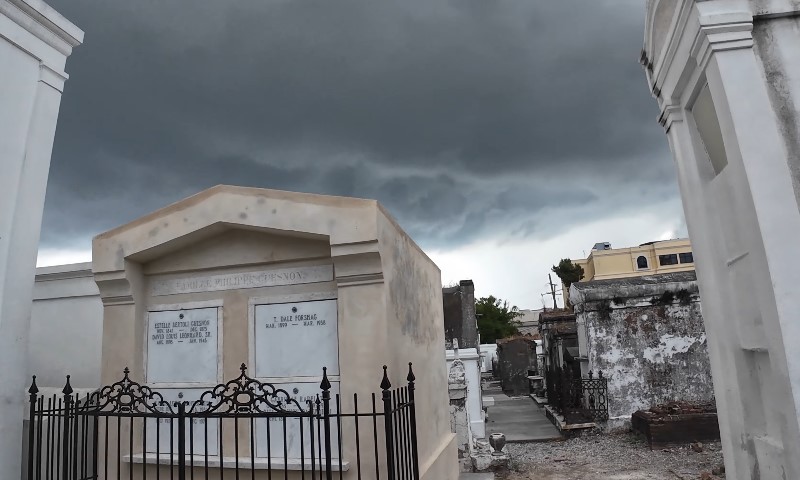
Dating to 1789, St. Louis Cemetery No. 1 is probably the best-known historic cemetery in Nawlins. Unlike traditional American cemeteries, its dead are buried in above-ground tombs, creating narrow corridors of weathered stone vaults and mausoleums.
The cemetery’s most famous resident is Marie Laveau, the legendary Voodoo practitioner who became one of the city’s most enduring historical figures.
Stories surrounding Laveau have transformed her into something almost larger than life, and some visitors claim her spirit still wanders among the tombs.
Accounts of supernatural activity vary, from mysterious voices and apparitions to an eerie feeling of being watched.
Whether visitors encounter anything paranormal or not, walking among centuries-old tombs is an experience that can make the city’s history feel remarkably close.
The LaLaurie Mansion
View this post on Instagram
Few New Orleans ghost stories are as disturbing as that of Madame Delphine LaLaurie.
Born into a wealthy New Orleans family, Delphine McCarty married three times, eventually becoming Madame LaLaurie after marrying Frenchman Louis Christophe Dominique LaLaurie.
The couple became prominent members of New Orleans society and entertained lavishly at their mansion on Royal Street.
Then came the fire. In 1834, a blaze broke out at the mansion, and rescuers reportedly discovered enslaved people being held and abused inside.
The horrifying discovery transformed the LaLaurie residence from a symbol of wealth and status into one of the city’s darkest landmarks. The LaLauries fled New Orleans, and Delphine’s ultimate fate became the subject of further speculation and legend.
Today, the LaLaurie Mansion is widely regarded as one of the Big Easy’s most haunted buildings. Stories tell of screams, apparitions, shadowy figures, and other unexplained phenomena. Some accounts have undoubtedly become embellished over time, but the documented history alone is disturbing enough.
Old Ursuline Convent
The Old Ursuline Convent is one of the oldest surviving buildings in New Orleans and one of the clearest physical links to the city’s French colonial and Catholic past.
The Ursuline nuns arrived in Louisiana in the eighteenth century, where they established a convent, operated a school, cared for orphans, and provided medical and charitable assistance to the growing settlement.
Its age alone gives the building an unusual atmosphere. Thick walls, enclosed spaces, old religious traditions, and centuries of stories have made the convent a natural setting for some of New Orleans’ darker folklore.
The most famous legend involves young women sent to Louisiana from France during the colonial period. In later retellings, these girls became associated with the so-called “casket girls,” a name linked to the small chests or luggage they supposedly carried with them. Over time, the story grew considerably darker.
Later versions of the legend introduced several eerie details:
- Their trunks were said to contain something more sinister than clothing and personal possessions.
- Upper-floor windows were supposedly sealed or kept tightly shuttered to prevent something inside from escaping.
- Unexplained noises and shadowy figures were eventually folded into stories about creatures hiding within the convent.
- Some versions went even further, claiming that the girls themselves were vampires transported secretly across the Atlantic.
There is no reliable historical evidence that vampires arrived in Louisiana with these women, and the surviving records do not support the supernatural claims.
The vampire connection developed as folklore, shaped by New Orleans’ long fascination with death, Catholic imagery, European superstition, and Gothic storytelling.
That lack of evidence has done little to weaken the legend. The Old Ursuline Convent already has everything such a story needs: an eighteenth-century religious building, young women arriving after a dangerous Atlantic crossing, mysterious luggage, enclosed rooms, and generations of people willing to add darker details.
For visitors interested in the macabre side of New Orleans, the convent is compelling precisely because documented history and supernatural legend sit so close together.
The building is historically important on its own, but the vampire stories have given it a second life as one of the city’s most persistent pieces of paranormal folklore.
Muriel’s
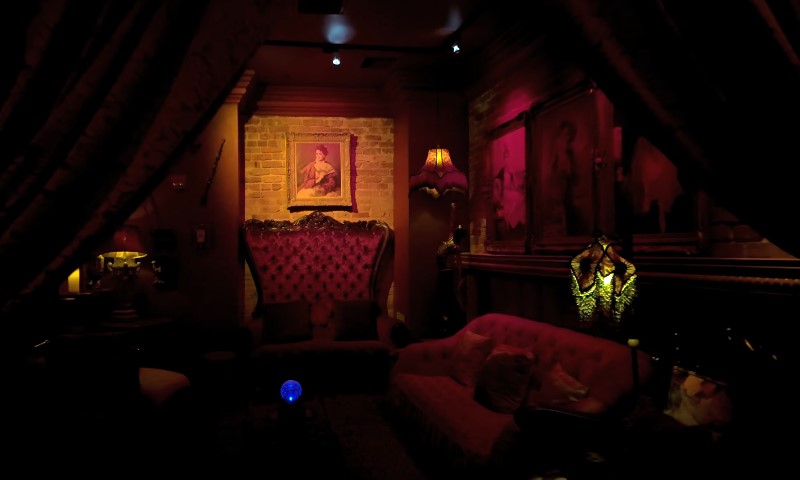
Located on Jackson Square, Muriel’s has a history that reaches back to the early days of New Orleans.
The restaurant occupies a building associated with Pierre Antoine Lepardi Jourdan, who reportedly lost the property in a poker game and later died by suicide upstairs.
According to local lore, Jourdan never quite left. The restaurant maintains a dedicated séance room in his memory, and a table is traditionally kept available for his spirit.
Staff and visitors have reported unexplained occurrences, including objects moving and strange sensations in the building.
For a city overflowing with haunting legends, Muriel’s takes the idea of entertaining the dead particularly seriously.
Lafitte’s Blacksmith Shop
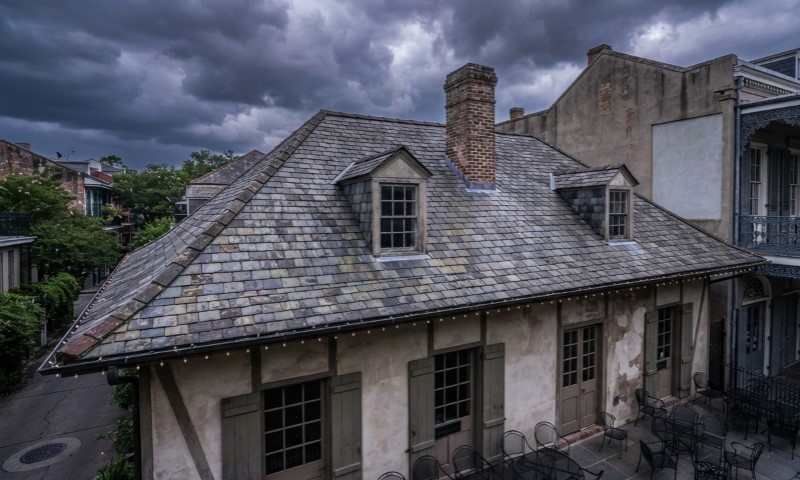
Tucked into the French Quarter, Lafitte’s Blacksmith Shop is one of the most atmospheric historic establishments in New Orleans.
The building dates to the early eighteenth century and is traditionally associated with pirate Jean Lafitte and his brother Pierre.
Legend claims the Lafitte brothers used the building as a base for smuggling operations.
Whether every detail of that story is accurate is difficult to establish, but the building’s age and connection to the city’s colorful past have made it a natural setting for ghost stories.
The most famous apparition is supposedly Lafitte himself, occasionally seen near the fireplace. Other visitors have reported mysterious shadows and unexplained activity.
A City Where History Never Seems to Leave
New Orleans has always been a city where the past refuses to stay in the past. Its cemeteries, mansions, churches, restaurants, and bars preserve stories from generations of people who lived, suffered, celebrated, fought, and died here.
That may be part of what makes its haunted places so compelling. The supernatural claims cannot always be verified, but the history beneath them is real.
And sometimes, after walking through a centuries-old cemetery or sitting beneath the flickering lights of an ancient bar, you may find yourself wondering whether some stories really do refuse to die.
In New Orleans, the dead may be gone. But according to local legend, they’re never really gone for good.